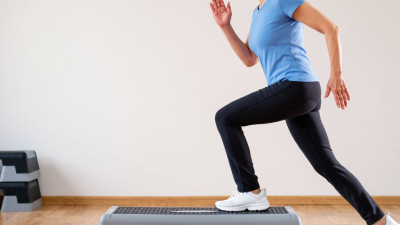
An Exercise Step Platform is more than a raised plastic surface. It creates a controlled height for stepping, lunging, incline push-ups, split squats, and low-impact aerobic routines. In a small home gym, one platform can support several training goals. Its surface also gives users clear spatial feedback: one foot lands, the body stabilizes, and the next movement begins.
The World Health Organization reported in its 2022 Global Status Report on Physical Activity that nearly 1.8 billion adults worldwide were insufficiently active in 2022. The report warns that inactivity could contribute to almost 500 million preventable cases of heart disease, type 2 diabetes, obesity, and other conditions between 2020 and 2030. A step platform cannot solve this problem alone. Still, it can reduce equipment barriers and make short movement sessions easier to repeat. That practical advantage matters.
Exercise scientist Len Kravitz has described step training as “an effective mode of exercise for improving cardiovascular fitness, muscular endurance, and coordination.” The wording sounds convincing, but results still depend on technique, intensity, and consistency. A shaky platform, poor footwear, or excessive height can turn a simple exercise into a balance challenge. The American College of Sports Medicine’s 2024 fitness trends report also emphasizes accessible, sustainable movement rather than complicated equipment. Therefore, this guide examines what an Exercise Step Platform is used for, who benefits from it, and where its limits deserve honest attention.
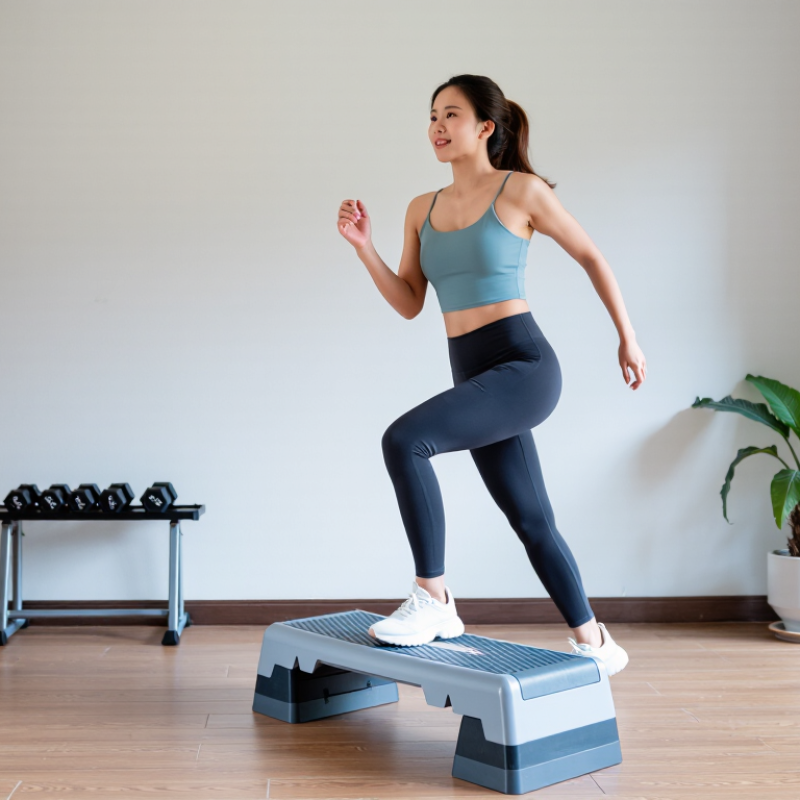
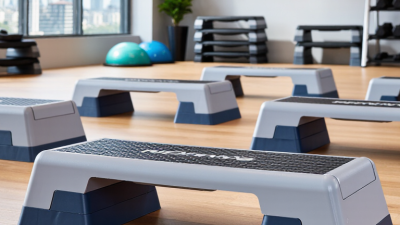
An exercise step platform is a raised, stable surface for stepping, low-impact cardio, strength drills, and balance practice. Its basic design is straightforward: a broad rectangular deck rests on a firm supporting base. The deck often includes a textured, non-slip surface for better foot contact during repeated movement. Many platforms use removable or adjustable risers. These parts change the platform’s height as fitness levels, mobility, or training goals develop. A lower setting may suit beginners or controlled rehabilitation exercises. Start low. A higher setting increases effort, but it should never force unstable movement.
Good design depends on stability. Wide supports help reduce rocking, while balanced weight distribution lowers the risk of tipping. Rounded edges can improve comfort during floor-based exercises. The frame should feel solid under body weight, yet remain manageable to reposition. Check the stated weight capacity before training.
Inspect the risers, feet, and surface for cracks or looseness. Small defects matter. In practical training, users often focus on speed and overlook alignment. That is an imperfect habit. Keep the knee tracking toward the toes, and place the whole foot on the deck when stepping up. The ideal height is not universal. It depends on leg strength, coordination, joint comfort, and the exercise itself. A platform that looks basic still requires thoughtful adjustment.
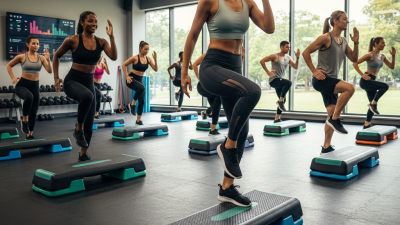
An exercise step platform supports cardio, strength, and balance training in a compact space. During step-ups, the repeated rise-and-lower pattern raises heart rate without requiring complex equipment. The 2024 Adult Compendium of Physical Activities lists step aerobics at roughly 5.5 to 9 METs, depending on pace and choreography. That range can support moderate or vigorous cardiovascular work.
Keep the rhythm controlled. A 10-minute interval might include steady stepping, knee lifts, and brief recovery periods. The World Health Organization recommends 150–300 minutes of moderate activity weekly, or 75–150 minutes of vigorous activity. A step platform cannot replace every form of exercise, but it can make that target more practical. Higher platforms increase demand, although higher is not automatically better.
Higher platforms increase demand, although higher is not automatically better.
For strength training, users can perform split squats, incline push-ups, calf raises, and elevated lunges. Slow repetitions often create more useful tension than fast movements. Balance work can include single-leg stands, step-downs, and controlled lateral movements. Start near a stable support if ankle control feels uncertain. The American College of Sports Medicine recommends muscle-strengthening activity at least two days weekly, covering major muscle groups. In practice, balance usually improves gradually. My own experience suggests that fatigue exposes technique problems quickly. That is useful feedback, but it also means the platform should not be treated as a shortcut.
An exercise step platform supports aerobic routines, strength drills, balance work, and low-impact conditioning. Users step up, down, or across its surface while controlling their body weight. It can raise the difficulty of lunges, incline push-ups, and calf raises. A stable platform also helps users practice rhythm without occupying much space.
The right height depends on experience, mobility, and exercise goals. Beginners often need a low platform, usually around 10 centimeters, to learn controlled foot placement. Stronger users may prefer adjustable risers for deeper knee movement. However, higher is not automatically better. It can increase joint stress and reduce balance. Older adults or users returning from injury should choose a wide, low surface with firm edges. Professional medical guidance may be appropriate after surgery or during rehabilitation.
During home workouts, I test for wobbling before every session. The surface should feel secure under both feet, even during quick changes. A textured top can reduce slipping, but it cannot replace suitable athletic shoes. Check the stated weight capacity, platform width, riser locks, and floor compatibility. I once focused too much on height and overlooked storage space, which made regular training inconvenient. That mistake still affects my buying decisions. A practical platform should fit the user, the movement, and the room.
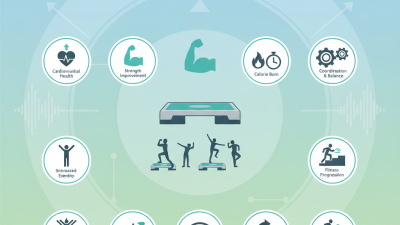
A step platform turns simple movements into controlled, measurable training. The American College of Sports Medicine’s 2024 Worldwide Survey of Fitness Trends identifies functional fitness as a continuing industry focus. Step training fits this approach because it develops balance, coordination, leg strength, and repeated movement control.
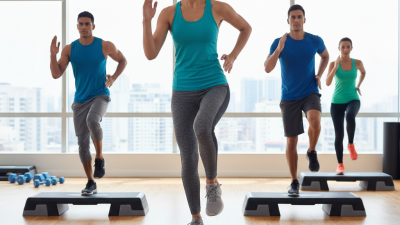
Basic step-ups are the natural starting point. Place one foot on the platform, drive through the heel, and stand tall. Alternate legs for steady cardio work. Lateral step-ups challenge the outer hips and require more balance. Add knee drives for a stronger coordination demand. Alternating toe taps are useful during warm-ups because they raise the heart rate without excessive impact. Keep the rhythm comfortable.
Strength-focused exercises need slower control. Try split squats with the front foot elevated, incline push-ups with both hands on the platform, and calf raises from its edge. The World Health Organization recommends 150–300 minutes of moderate aerobic activity weekly, plus muscle-strengthening work on at least two days. A platform can support both targets, but it cannot replace sound programming. Height matters. A platform that is too high may force the knee inward or cause the back to compensate. That is a common mistake. Use a lower height first, keep the chest stable, and stop when technique becomes unclear. Even experienced exercisers should reassess fatigue, footwear, and floor stability before increasing speed.
| Exercise | Main Purpose | Primary Muscles | Typical Platform Height | Suggested Volume | Difficulty | Key Technique and Safety Point |
|---|---|---|---|---|---|---|
| Basic Step-Up | Builds lower-body strength and improves stair-climbing ability. | Quadriceps, gluteus maximus, hamstrings, and calves | 10–20 cm for beginners; increase gradually when control is consistent. | 2–3 sets of 8–12 repetitions per leg | Beginner | Place the whole working foot on the platform, drive through the heel, and avoid pushing excessively from the trailing leg. |
| Lateral Step-Up | Challenges side-to-side control and strengthens the muscles used for lateral movement. | Gluteus medius, quadriceps, gluteus maximus, and calves | 10–15 cm initially; use a lower height if balance is limited. | 2–3 sets of 8–12 repetitions per side | Beginner | Keep the knee aligned with the toes and control the downward movement rather than dropping off the platform. |
| Alternating Step Touch | Provides low-impact cardiovascular activity and helps develop rhythm and coordination. | Calves, quadriceps, glutes, and hip stabilizers | 10–15 cm for a comfortable, low-impact pace. | 2–5 rounds of 30–60 seconds | Beginner | Maintain an upright posture, use controlled foot placement, and keep the pace comfortable enough to preserve balance. |
| Step Aerobic Knee Lift | Combines cardiovascular conditioning with single-leg balance and hip-flexion practice. | Quadriceps, glutes, calves, hip flexors, and core stabilizers | 10–15 cm for beginners; a lower platform supports better control. | 2–4 rounds of 30–60 seconds | Beginner | Step up smoothly before lifting the opposite knee; keep the standing knee soft and avoid locking it. |
| Reverse Lunge from Platform | Develops unilateral leg strength, hip stability, and controlled range of motion. | Glutes, quadriceps, hamstrings, and calves | Use a low platform of approximately 5–10 cm, or perform from the floor first. | 2–3 sets of 6–10 repetitions per leg | Intermediate | Step backward carefully, keep the front foot stable, and lower only as far as the knees and hips remain controlled. |
| Incline Push-Up | Builds upper-body pushing strength with less load than a floor push-up. | Chest, shoulders, triceps, and abdominal muscles | 20–45 cm; a higher platform generally makes the movement easier. | 2–3 sets of 8–15 repetitions | Beginner | Keep hands directly below or slightly wider than the shoulders, maintain a straight body line, and confirm the platform does not slide. |
| Bulgarian Split Squat | Targets single-leg strength, mobility, and balance with a greater range of motion. | Quadriceps, glutes, hamstrings, and hip stabilizers | 15–30 cm for most users; lower support is often easier to control. | 2–3 sets of 6–10 repetitions per leg | Intermediate | Rest the top of the rear foot lightly on the platform, keep the front knee tracking over the toes, and avoid forcing depth. |
| Burpee with Step-Up | Combines whole-body conditioning with a lower-impact alternative to jumping onto a platform. | Chest, shoulders, arms, quadriceps, glutes, and core | 10–15 cm; select a height that allows secure foot placement. | 2–4 sets of 5–10 repetitions | Intermediate | Move from the floor to standing under control, step onto the platform rather than jumping if impact needs to be reduced, and stop when technique declines. |
| Calf Raise | Strengthens the lower leg and supports ankle control during walking, running, and stepping. | Gastrocnemius and soleus muscles | 5–10 cm of platform height, with room for the forefoot only. | 2–4 sets of 12–20 repetitions | Beginner | Use a wall or stable support for balance, rise through the balls of the feet, and lower the heels slowly without bouncing. |
What Is an Exercise Step Platform Used For?
Safety Guidelines and Proper Training Techniques
An exercise step platform supports aerobic training, balance work, and lower-body strengthening. Safe use begins with the equipment and the floor. Place the platform on a flat, dry, non-slip surface. Check for cracks, loose parts, or an unstable height setting before every session. Wear supportive shoes with clean, dry soles. Keep enough space around you to step down safely.
Start with a low height and a five-minute warm-up. Step up with your whole foot, not just your toes. Keep your knees aligned with your second toe. Maintain a tall posture, relaxed shoulders, and steady breathing. Avoid locking your knees. Move slowly before increasing your rhythm. Do not jump onto the platform until your balance and landing control are reliable. Pain is a warning.
Use alternating lead legs to reduce uneven loading. Practice basic step-ups, controlled step-downs, and side steps before adding arm movements. Train for ten to fifteen minutes at a manageable effort. Increase only one factor at a time, such as height, speed, or duration. I sometimes notice my form worsening when I chase a faster pace. That is a useful reminder to slow down. Rest when you feel dizzy, unusually breathless, or unstable. People with joint problems, recent injuries, or medical conditions should seek professional guidance before training.