China Top Exercise Step Platform Supplier for Global Buyers

China has become a major sourcing base for global fitness equipment buyers. Its manufacturing network supports injection molding, steel fabrication, surface finishing, and export packaging. These capabilities matter when buyers evaluate an Exercise Step Platform for gyms, studios, schools, and home users.

Grand View Research reported that the global home fitness equipment market reached approximately USD 11.3 billion in 2022. It also projected continued growth through 2030. Meanwhile, the World Health Organization recommends 150 to 300 minutes of moderate physical activity weekly. Step platforms support accessible movement, balance drills, aerobic routines, and progressive strength exercises. They require limited floor space. That is a practical advantage.

Dr. Wayne Westcott, a recognized strength-training researcher, has stated, “Strength training is the key to maintaining functional independence as we age.” His observation explains why platform design should support more than fast workouts. Buyers should inspect platform height, anti-slip texture, edge stability, load testing, and material consistency. A reliable China supplier should provide production samples, inspection records, packaging details, and clear customization limits. Certifications alone are not enough.

Some suppliers still focus heavily on low prices. That approach can hide uneven surfaces, weak hinges, or unstable rubber feet. It deserves scrutiny. Global buyers should compare factory experience, quality controls, shipping performance, and after-sales communication. No supplier is perfect, including established manufacturers. However, disciplined verification can reduce avoidable risks. The strongest partners combine responsive engineering with repeatable production. This guide examines how China’s top Exercise Step Platform suppliers compete on safety, customization, reliability, and international delivery.
China Top Exercise Step Platform Supplier for Global Buyers

Exercise Step Platforms: Definition, Uses, and Main Product Types

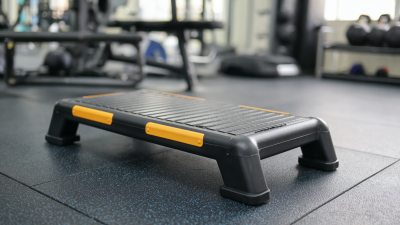
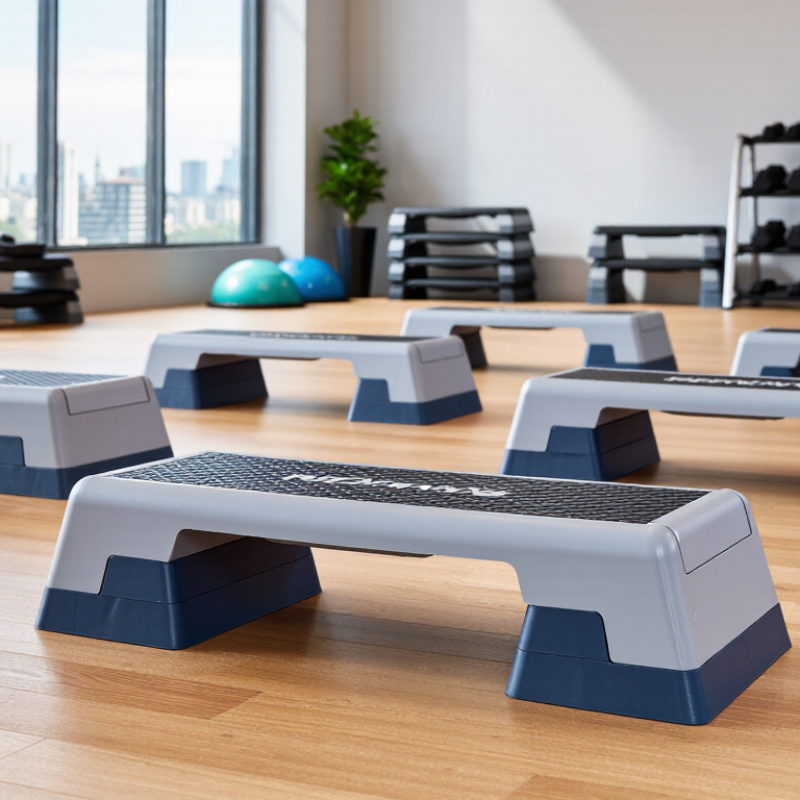
An exercise step platform is a raised, portable surface for stepping, climbing, balance drills, and choreographed cardio. Its height changes training intensity and joint loading. Common uses include home workouts, studio classes, sports conditioning, and supervised rehabilitation. The World Health Organization reported in 2024 that 31% of adults worldwide were insufficiently physically active. This indicates a practical need for simple, accessible equipment.

Main product types include fixed-height platforms, adjustable platforms with removable risers, compact mini steps, and wider commercial models. Fixed platforms are easy to store and usually suit beginners. Adjustable designs offer more progression, but loose risers can create instability. Wider platforms provide better lateral movement space. However, larger sizes increase shipping volume and handling costs for global buyers.

According to Grand View Research, the global fitness equipment market was valued at approximately USD 16.4 billion in 2022, with continued growth projected through 2030. That market signal supports demand for dependable step products, yet price alone is not enough. Suppliers in China should provide load-test records, non-slip surface checks, consistent height measurements, and packaging drop-test evidence. Small details matter. A platform may look solid but flex under repeated impact. Product testing should reflect real foot placement, sweat, transport vibration, and uneven floors. The category is not perfectly standardized, so buyers should verify dimensions, materials, testing methods, and user instructions before placing large orders.

China’s Exercise Step Platform Manufacturing Industry

China Top Exercise Step Platform Supplier for Global Buyers

China’s exercise step platform manufacturing industry is growing with wider home fitness demand. The National Bureau of Statistics reported China’s sports industry reached RMB 3.3 trillion in total scale in 2022. Its added value exceeded RMB 1.3 trillion. This growth supports deeper manufacturing capacity, not only larger production volumes.

A reliable exercise step platform begins with material control. Factories commonly use polypropylene, TPE, and reinforced steel components. These materials affect impact resistance, surface grip, and product weight. Practical quality checks should include repeated drop tests, load testing, edge inspection, and anti-slip testing. A platform may look stable indoors, yet shift on dusty flooring. That detail is easy to miss.

Grand View Research estimated the global fitness equipment market at about USD 16 billion in 2022, with continued growth expected through 2030. This trend creates opportunities for Chinese suppliers serving gyms, retailers, and online sellers. Export buyers should request batch records, dimensional tolerances, packaging tests, and applicable compliance documents. Some suppliers still focus heavily on appearance. That is not enough. A bright platform with weak locking points can create costly returns and damage trust. Manufacturers also need to improve recyclable packaging and reduce unnecessary plastic, although progress remains uneven.

Key Features of a Reliable Chinese Step Platform Supplier

China Top Exercise Step Platform Supplier for Global Buyers
Key Features of a Reliable Chinese Step Platform Supplier
A reliable Chinese step platform supplier begins with consistent product engineering. Experienced factories should provide clear dimensions, material specifications, weight limits, and surface texture details. A platform should feel stable under repeated movement, not only look attractive in photographs. Rounded edges, balanced feet, and non-slip surfaces reduce common training concerns. Small details matter.
Professional suppliers usually maintain documented quality checks at several production stages. These checks may include weld inspection, plastic thickness measurement, load testing, and packaging review. Buyers should request recent test records and product samples before placing large orders. Factory visits or independent inspections can reveal details that online conversations often miss. Photos are useful, but evidence is stronger.
Reliable communication also shows operational maturity. A capable supplier confirms drawings, color references, carton dimensions, and delivery schedules in writing. They should explain how defects are handled instead of promising perfection. No supplier is perfect. A minor inconsistency may still appear during mass production, so corrective procedures deserve careful attention. Responsible suppliers support reasonable customization while protecting structural safety. They also prepare accurate export documents and compliance information for the destination market. Regular updates, traceable batches, and realistic lead times help global buyers manage inventory with fewer surprises.

How Global Buyers Evaluate Quality, Safety, and Compliance

Global buyers rarely judge an exercise step platform by appearance alone. They inspect stability, impact resistance, surface grip, and load performance. The World Health Organization’s Global Status Report on Physical Activity 2022 estimates that 31% of adults worldwide are insufficiently active. This supports demand for simple home and commercial training products. It also raises safety expectations.

A serious supplier should provide test records, material specifications, and traceable batch information. Buyers should check platform height, edge design, weld quality, and rubber-foot adhesion. ISO 20957-1 addresses general safety requirements for stationary training equipment, including stability, instructions, and user warnings. Local standards may add different testing or labeling duties. One certificate is not enough.

During factory evaluation, buyers can request repeated load testing and inspect samples after use. A platform may feel solid on day one, yet loosen after thousands of step cycles. That detail is easy to miss. ASTM and EN-based testing methods can support product verification, but documentation must match the actual model. Packaging also matters. Crushed corners or missing warning labels can create compliance problems before the product reaches a gym. The ACSM Worldwide Survey of Fitness Trends 2024, based on nearly 2,000 fitness professionals, confirms continued interest in accessible, technology-supported exercise. Still, basic equipment must remain dependable without complicated features. A glossy finish cannot replace engineering evidence.

How Global Buyers Evaluate Exercise Step Platform Suppliers

Buyer evaluation priorities are typically centered on product safety, material quality, regulatory compliance, durability, and supplier reliability.

The index represents the relative importance of each evaluation dimension during international sourcing. Safety and compliance are weighted most heavily because exercise equipment must meet applicable market and product-safety requirements.

Sourcing, Customization, Pricing, and International Delivery Considerations

Global buyers sourcing exercise step platforms from China should begin with a clear product specification. Define platform height, surface texture, weight capacity, materials, and target users. A sample inspection can reveal problems that photos hide, such as sharp edges or unstable feet. Ask suppliers for factory photos, production records, load-test results, and independent quality checks. Experience shows that one approved sample is not enough. Production consistency still needs monitoring.

Customization may include colors, dimensions, logos, packaging, and molded textures. However, every change can affect tooling fees, minimum order quantities, and lead times. Request a written quotation with separate costs for tooling, sampling, packaging, and export handling. Compare the full landed cost, not only the unit price. A very low offer may exclude inspection or protective packaging. That mistake becomes expensive later.

International delivery requires careful planning. Confirm carton sizes, gross weight, pallet requirements, and destination port before booking freight. Ask whether the quotation uses EXW, FOB, or another agreed trade term. Verify commercial invoices, packing lists, and required product documents with your customs broker. Sea freight may reduce cost, while air freight suits urgent samples. Delays happen. Leave buffer time for factory revisions, port congestion, and seasonal closures. A practical supplier should communicate clearly, accept reasonable inspections, and correct defects without avoiding responsibility.

China Top Exercise Step Platform Supplier for Global Buyers - Sourcing, Customization, Pricing, and International Delivery Considerations
Product or Sourcing Dimension Common Specification or Market Standard Indicative Wholesale Price
(USD per Unit)
Typical MOQ Customization Options Estimated Production Lead Time International Delivery Considerations
Basic aerobic step platform One-piece or two-piece polypropylene platform; approximately 68–80 cm long, 28–32 cm wide, and 10–15 cm high $8–$18 100–500 units Color, surface texture, carton artwork, instruction insert, and barcode label 25–40 days after order confirmation Lightweight and suitable for consolidated sea freight; carton dimensions should be checked to control volumetric shipping costs
Adjustable aerobic step platform Height-adjustable design with removable risers; common height range of approximately 10–20 cm $14–$32 100–300 units Platform color, riser configuration, molded logo, packaging, and user manual 30–45 days after approval of samples Risers increase carton volume; buyers should request packed dimensions and gross weight before comparing freight quotations
Commercial heavy-duty step platform Reinforced polypropylene or composite construction; anti-slip top; higher static-load capacity for gyms and studios $28–$65 100–300 units Load-rating label, structural color, custom packaging, product testing, and safety documentation 35–55 days after specification approval Higher unit weight may favor full-container shipments; packaging must protect edges and locking components during long-distance transport
Compact home-use step platform Foldable or low-profile construction; generally designed for home cardio, rehabilitation, and small training spaces $10–$24 200–500 units Color matching, retail box, multilingual instructions, and customized product photography 25–40 days after artwork approval Retail packaging can reduce repacking work at destination but may increase carton volume and damage risk
Private-label packaging program Existing standard product supplied with buyer-specific packaging and sales materials Packaging cost commonly adds $0.30–$2.50 per unit 300–1,000 units Printed cartons, color boxes, hang tags, stickers, manuals, and barcode labels 30–50 days, depending on print approval Confirm packaging language, recycling marks, carton labeling, and destination-market requirements before mass production
Molded or embossed logo Logo integrated into the product surface rather than applied as a separate label Usually adds $0.20–$1.20 per unit 500–2,000 units Logo size, position, raised or recessed finish, and color contrast Additional 10–25 days if a new tooling insert is required Obtain a pre-production sample because logo depth and surface curvature affect visual quality and cleaning performance
Material and safety verification Typical materials include polypropylene, polyethylene, rubber feet, and thermoplastic anti-slip surfaces Testing fees are commonly quoted separately Usually linked to the production MOQ Material declaration, load testing, anti-slip evaluation, packaging-drop testing, and restricted-substance documentation 7–20 working days for common laboratory checks Required documents vary by destination and sales channel; buyers should verify applicable consumer-product and chemical requirements before shipment
Sample order One to five units for dimensional, stability, packaging, and surface-finish evaluation $20–$80 per unit before freight, depending on design 1–5 units Sample color, logo placement, packaging prototype, and instruction layout 7–15 days for existing designs; longer for customized samples Express shipping is fast but costly; sample freight should not be used as the final bulk-shipping benchmark
Sea freight for bulk orders Common choice for palletized or containerized shipments with longer planning cycles Quoted by route, season, volume, and Incoterm Often economically suitable from approximately 1–3 m³ upward Container loading plan, pallet configuration, carton markings, and shipping documents Approximately 25–55 days port-to-port, excluding production and customs clearance Allow additional time for export handling, transshipment, destination port congestion, customs, and inland delivery
Air or express delivery Used mainly for samples, urgent replenishment, or small commercial quantities Quoted according to chargeable weight and destination 1 unit upward Protective inner packaging, commercial invoice, packing list, and accurate product description Approximately 3–10 business days in transit after dispatch Chargeable weight may be based on dimensional volume rather than actual weight; confirm duties and taxes before selecting door-to-door service
Common commercial terms EXW, FOB, CIF, and DDP may be offered depending on the supplier and destination Final price depends on whether freight, insurance, duties, and delivery are included Varies by product and quotation basis Quotation can include inspection, palletizing, labeling, and document preparation Negotiated during order planning Compare quotations on the same Incoterm and confirm exactly which destination charges, taxes, customs services, and inland transport costs are included
Quality-control checkpoint Pre-production sample, in-line inspection, final inspection, carton inspection, and loading supervision Third-party inspection often costs approximately $200–$450 per inspection day Recommended for first orders and customized products AQL level, critical-major-minor defect limits, load test, dimensions, color, packaging, and quantity verification Inspection is normally completed 1–5 days before shipment Inspection results should be approved before balance payment and release of shipping documents
Recommended buyer evaluation criteria Product stability, maximum user load, anti-slip performance, riser locking, surface finish, packaging strength, and document quality Lowest unit price should not be the only selection factor Based on sales forecast and cash-flow plan Use a written specification sheet and approved golden sample for repeat orders Allow time for sampling, testing, production, and buffer stock Build a landed-cost model covering product, packaging, freight, insurance, duties, taxes, inspection, and final-mile delivery
Planning note: Price ranges, MOQs, and lead times are indicative industry planning figures for standard exercise step platforms. Actual quotations vary according to material, design, order volume, packaging, testing requirements, seasonality, destination, and Incoterms. Buyers should obtain a written quotation, approved sample, packed dimensions, and landed-cost calculation before placing a commercial order.