What Is the Standard Exercise Step Height?
Choosing the right Exercise Step Height can shape the quality, safety, and purpose of a workout. Yet, no single height suits every person or training goal. Many commercial aerobic steps begin around 4 inches, while 6 to 8 inches often supports moderate home workouts. Higher settings may challenge experienced users, but they also demand stronger balance, joint control, and recovery.
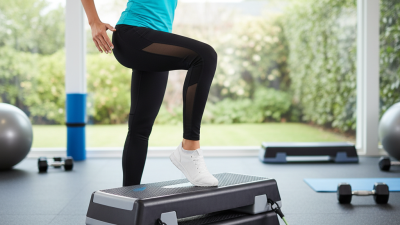
The safest height allows a controlled step-up without leaning heavily or twisting the knee. Your front foot should stay fully supported, and your knee should track in line with your toes. Keep the movement quiet. That detail matters. A loud landing may suggest fatigue, poor control, or excessive height.
Fitness professionals commonly adjust step height according to leg strength, mobility, coordination, and exercise experience. A beginner may feel comfortable at 4 inches but struggle at 8 inches after several minutes. An athlete might use a higher platform for power drills, although height alone does not create better training. Technique remains more important.
Measure the platform before starting, especially when equipment markings are unclear. Test several slow repetitions beside a stable support. If your hips shift, your heel hangs off the edge, or your knee collapses inward, lower the platform. That is useful feedback.
There is room for judgment here. Body proportions and previous injuries can change the ideal setup. Even experienced exercisers sometimes choose a height that looks impressive but feels unstable. This guide examines common standards, practical adjustments, and signs that your chosen Exercise Step Height needs reconsideration. Progress should feel deliberate, not dramatic.
Standard Exercise Step Height: Definition and Common Measurements
What Is the Standard Exercise Step Height?
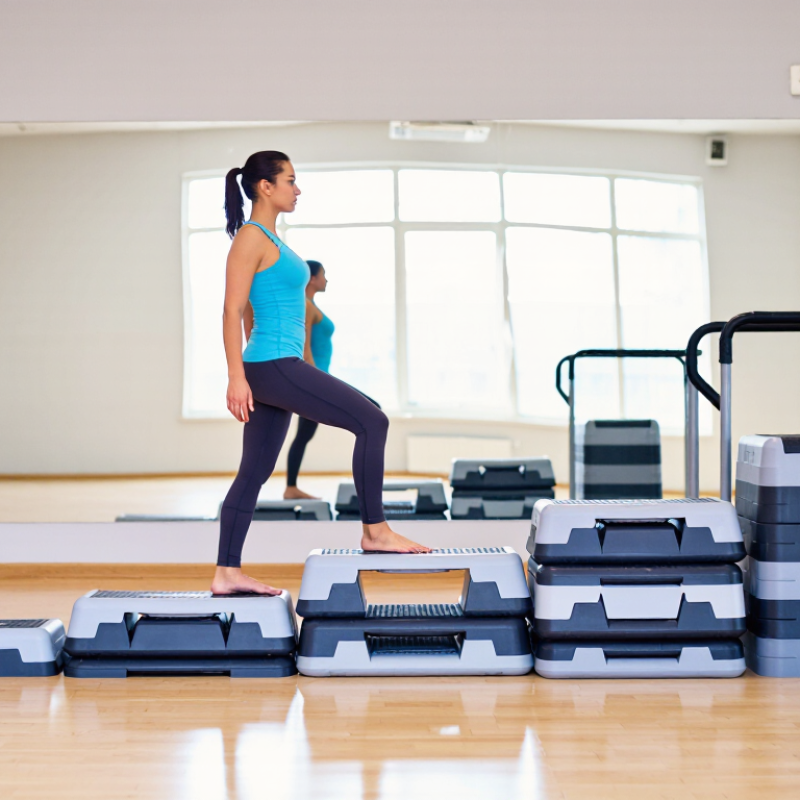
Standard exercise step height refers to the vertical distance from the floor to the platform surface. There is no single worldwide height for every workout. In practical training, adjustable platforms commonly offer 4, 6, 8, 10, or 12 inches. A lower setting suits beginners, balance practice, and controlled resistance work. Higher settings increase hip and knee flexion, demanding more strength and stability.
Professional testing protocols show why measurements differ. The YMCA three-minute step test uses a 12-inch, or 30.5-centimeter, step. The Harvard Step Test uses a 20-inch, or 50.8-centimeter, bench. Queen’s College testing uses approximately 16.25 inches, or 41.3 centimeters. These figures come from established exercise assessment methods, not universal equipment rules. The American College of Sports Medicine also emphasizes screening, gradual progression, and individual exercise tolerance in its guidelines.
For general step workouts, 4 to 8 inches is often a practical starting range. Your knee should track toward the toes, not collapse inward. The entire foot should contact the platform. That detail matters. A 12-inch step may feel manageable during slow practice but become unstable during fast repetitions. I would not treat “standard” as automatically safe. User height, leg strength, ankle mobility, and fatigue can change the correct setting. Even professional recommendations need real-world adjustment.
How Exercise Step Height Is Determined
Exercise step height is not a universal number. It is determined by movement quality, user experience, leg length, and training intensity. The American College of Sports Medicine’s Guidelines for Exercise Testing and Prescription, 11th edition, treats step tests as protocol-specific. Different tests use different bench heights, so one “standard” cannot fit every session.
For general aerobic training, platforms commonly range from 10 to 20 centimetres. Beginners often start near 10 centimetres, while trained users may progress toward 15 or 20 centimetres. The decision should follow knee control and breathing, not ambition.
At the top position, the stepping knee should remain stable, without collapsing inward. The foot should land fully on the platform. A higher step increases hip and knee demand, while a faster rhythm raises cardiovascular stress. Both variables should not increase together.
Safety standards offer useful boundaries, but they do not set one exercise height. ASTM F2276-19 addresses fitness-equipment safety and design expectations, rather than prescribing a universal platform size. ACSM recommends 150–300 minutes of moderate aerobic activity weekly, yet moderate intensity can feel very different across users.
That matters. I once assumed a taller step meant better training. It mainly produced shorter, less controlled repetitions. Measure, then adjust.
A practical starting point is a height that allows ten smooth repetitions without pushing off the trailing foot. If posture changes, reduce the height. The “standard” should remain adjustable.
Typical Step Heights for Different Fitness Activities
What Is the Standard Exercise Step Height?
Typical Step Heights for Different Fitness Activities
There is no universal exercise step height. The correct measurement depends on intensity, movement quality, and participant experience. For low-impact aerobics, a 4-inch step usually suits beginners, older adults, and people returning after a break. A 6- to 8-inch platform adds moderate cardiovascular demand without forcing excessive knee lift. Advanced choreographed sessions may use 10 to 12 inches, but only when users maintain stable landings. Start lower.
The YMCA three-minute step-test protocol uses a 12-inch bench, while the Harvard Step Test uses a 20-inch bench. These are testing standards, not everyday workout recommendations. For strength step-ups, coaching guidance commonly begins around 6 to 8 inches, then progresses gradually according to hip and knee control.
Functional training is a major industry focus; the American College of Sports Medicine’s 2024 Worldwide Survey ranked traditional strength training fifth and functional fitness ninth among global trends. However, the survey does not define one standard platform height. That gap is important. A taller step can look more athletic while quietly reducing balance and increasing trunk lean. In practice, the best height allows the whole foot to land, the knee to track forward, and the user to descend without dropping. Perfect numbers can mislead. Body proportions and fatigue still matter.
Choosing the Right Step Height for Your Training Goals
What Is the Standard Exercise Step Height?
Choosing the Right Step Height for Your Training Goals
For most general workouts, a standard exercise step stands 4 to 8 inches high. Advanced conditioning may use 10 to 12 inches. However, height should follow movement quality, not ego. A lower step helps beginners practice balance, knee tracking, and controlled foot placement. It can also suit rehabilitation-style training when a qualified clinician has approved the exercise. There is no universal best height.
Choose a 4- to 6-inch step for beginners, older adults, or low-impact cardio. An 8-inch step can challenge healthy adults during step-ups, lunges, and split squats. A 10- to 12-inch platform demands more hip and leg strength. Your front thigh should remain roughly parallel to the floor at the top. Keep your knee aligned with your second toe. Stop if your pelvis twists or your heel lifts.
Match the height to your goal. Lower platforms support steady cardio and technique work. Taller platforms increase strength demands, but they do not automatically improve results. Test the height slowly. Five controlled repetitions can reveal more than one rushed set. A coaching check I often value is quiet movement: no jumping down, wobbling, or knee collapse. I have seen motivated trainees choose excessive height and lose form within minutes. That mistake is easy to repeat. Reassess the platform when fatigue changes your posture.
Safety Factors That Affect Exercise Step Height
What Is the Standard Exercise Step Height?
Many home users consider 6 inches a standard exercise step height. However, no single height suits everyone. Adjustable platforms often range from about 4 to 8 inches. Some advanced users choose higher settings. Height should follow control, not ambition.
From practical coaching experience, balance can disappear when a comfortable step becomes too tall. Even a small increase changes knee lift, landing force, and confidence. Leg length, ankle mobility, fitness experience, and exercise type all matter. Low-impact routines may suit 4 inches. Fast lateral drills need caution.
Keep the platform stable. Place it on a level, non-slip floor, and check that it does not rock. Supportive footwear also helps.
Your knee should track over your toes during every step. If your heel hangs off, the platform may be too narrow or too high.
Fatigue is another safety factor. When posture changes, lower the height or stop. A qualified trainer or physical therapist can offer useful guidance after injury, pain, or balance concerns.
Tips:
Start at the lowest setting. Test ten slow repetitions. Hold a rail only when it is secure. Avoid jumping until each landing feels quiet and controlled. I sometimes overestimate my readiness; many exercisers do. That honest check can prevent a careless choice.