China Best Aerobic Exercise Step Platform Manufacturers?

China’s fitness equipment sector is expanding, but buyers need evidence beyond attractive factory photos. This introduction examines China’s best Aerobic Exercise Step Platform manufacturers through product design, safety testing, production experience, and export reliability.

The World Health Organization recommends 150–300 minutes of moderate physical activity weekly for adults. A stable step platform can support this routine in homes, studios, rehabilitation spaces, and hotel gyms. The ACSM Worldwide Survey of Fitness Trends 2024 also keeps home-based fitness and functional training highly relevant. These findings do not prove that every platform will perform well. They show why practical, accessible equipment still matters.

Market data adds useful context. Grand View Research reports continued growth in the global home fitness equipment market, driven by convenience and compact product designs. For manufacturers, this means more than producing a plastic step with adjustable risers. Buyers should inspect platform dimensions, surface grip, load testing, weld quality, packaging, and replacement-part support. Small details matter. A loose riser becomes obvious during repeated lateral movement.

Cedric X. Bryant, President and Chief Science Officer of the American Council on Exercise, often emphasizes a simple principle: “The best exercise is the one you’ll do consistently.” That idea applies directly to step platforms. A reliable model should feel steady, quiet, and easy to store. However, supplier rankings remain imperfect. Certifications may differ by market, and online specifications can be incomplete. This guide therefore compares Chinese manufacturers using verifiable information, customer experience, factory capability, and transparent communication. Readers should still request samples before placing a large order.
China Best Aerobic Exercise Step Platform Manufacturers?

What Defines a Commercial Step Platform: 6–12 in Height and 300-lb Load

China Best Aerobic Exercise Step Platform Manufacturers?

What Defines a Commercial Step Platform: 6–12 in Height and 300-lb Load

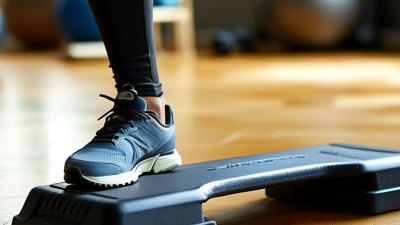
A commercial aerobic step platform is more than a plastic riser. Its practical definition starts with a working height of 6 to 12 inches and a tested load rating of 300 pounds. Lower settings support fast footwork, while higher settings demand greater balance and control. In gym-floor checks, I look for a broad footprint, rounded edges, and rubber feet that stay planted on vinyl flooring. Small movements expose weak designs quickly.

Manufacturers should explain how the 300-pound rating was measured. Static weight differs from repeated stepping, jumping, and uneven landings. A reliable supplier provides material details, inspection records, and clear adjustment instructions. High-density molded plastic can resist daily impact, but wall thickness and underside reinforcement matter. A textured top helps reduce slipping when shoes or hands become damp. It is not a complete safety solution.

Height locks deserve close attention. They should engage fully, remain stable, and avoid pinching fingers during setup. I also check whether replacement feet and risers are available, because commercial equipment rarely stays new. Not every rating transfers. A 300-pound claim may not represent every movement or user. Buyers should request test conditions, cycle testing, and tolerance data before comparing factories in China. My evaluations can miss fatigue after months, so long-term field feedback still matters.

Which Safety Standards Apply: ISO 20957-1 and ASTM F2276 Compliance

For China-based aerobic step platform manufacturers, safety documentation should begin with ISO 20957-1 and ASTM F2276. These standards address different market expectations, but both demand more than attractive product images. ISO 20957-1 focuses on general safety for stationary training equipment. ASTM F2276 provides a fitness equipment framework commonly referenced in the United States. The exact edition and product classification must be verified before testing.

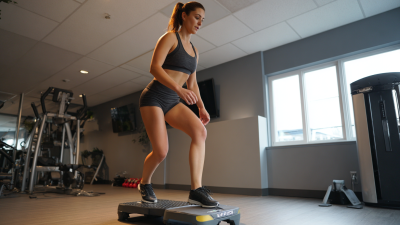
A reliable platform should remain stable during fast lateral movements and repeated step-downs. Inspectors should check slip resistance, edge strength, platform height, and maximum user weight. Rounded corners can reduce injury risks. Clear warnings and assembly instructions also matter. Load testing should reproduce real use, not only a static laboratory pose. Small details matter.

Factory quality teams should keep material records, test reports, drawings, and inspection results together. A platform may pass one test yet feel unstable on a dusty gym floor. That gap deserves attention. Standards cannot replace practical evaluation. Samples should be checked after repeated impact, temperature changes, and cleaning. Manufacturing tolerances also need control, because a few millimeters can affect balance. Compliance claims should identify the test scope, laboratory competence, and applicable market requirements. A certificate alone is not enough.

How Chinese Manufacturers Compare: MOQ, OEM Lead Times, and QC Metrics

China’s best aerobic exercise step platform manufacturers are often separated by execution, not catalog size. In sourcing reviews, I compare MOQ, OEM lead times, and measurable QC results. Typical MOQs may range from 100 to 500 units, depending on tooling and packaging. Lower MOQs can increase unit costs. They may also limit color choices.

For OEM projects, standard samples often take 7–15 days. Production commonly needs 25–45 days after approval. Complex molds or printed packaging can add extra time. Reliable factories provide drawings, material specifications, and a written inspection plan.

QC metrics should include platform load testing, anti-slip performance, weld or joint checks, dimensional tolerance, and carton drop testing. Ask for dated records, not attractive promises. A clean report is useful. It is not proof by itself.

Tips:

Request one production sample before mass manufacturing. Set an acceptable defect level in the purchase agreement. Verify resin or rubber material documents when relevant. Ask whether inspections occur during production, not only before shipment. I also recommend testing several platforms from different cartons. Results can vary. One weakness in many evaluations is overreliance on factory-provided data. Independent inspection costs more, but it can reveal uneven feet, weak locking pins, or packaging damage that photographs miss. That extra step may prevent a much larger replacement problem.

What Factory Testing Should Cover: Slip, Fatigue, Drop, and Load Tests

China Best Aerobic Exercise Step Platform Manufacturers?

A reliable factory should treat testing as a safety process, not a final photo opportunity. The U.S. Consumer Product Safety Commission’s 2022 NEISS report estimated more than 400,000 emergency-department injuries involving sports and recreational equipment. Aerobic platforms deserve careful attention because users land repeatedly, often with wet shoes and uneven balance.

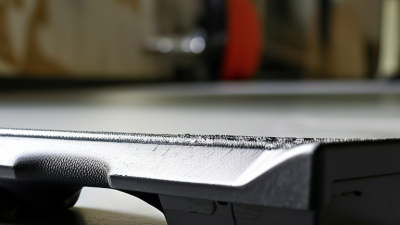
Slip testing should examine dry and damp surfaces, several shoe materials, and different landing angles. Record friction results, surface wear, and movement after repeated use. Fatigue testing should apply repeated stepping loads to the center, edges, and corners. Inspect cracks, loose feet, frame distortion, and noise. A single pass is not enough. Real users are inconsistent.

Drop testing should simulate a platform falling during handling or storage. Inspect hidden fractures, damaged welds, and weakened locking points. Load testing should use calibrated equipment and several loading positions, including off-center loading. ISO 20957-1 and ASTM F2276 offer useful fitness-equipment safety frameworks, but the factory should define its own worst-case protocol. Tips: Ask for raw test records, calibration dates, cycle counts, videos, and failed samples. Compare pre-test and post-test dimensions. Do not accept only a certificate. The World Health Organization reported that 31% of adults were insufficiently active in 2022, increasing demand for accessible home exercise equipment. That demand makes honest testing more important, even when results reveal weaknesses.

China Best Aerobic Exercise Step Platform Manufacturers? – What Factory Testing Should Cover: Slip, Fatigue, Drop, and Load Tests
Test Area Purpose Recommended Factory Test Method Typical Test Conditions Suggested Acceptance Criteria Records to Keep
Slip Resistance To verify that the user’s shoes remain stable on the stepping surface during repeated aerobic movement. Use a calibrated inclined-plane or horizontal-pull friction tester. Test the finished platform with the production tread pattern, surface texture, and any supplied risers installed. Test with dry and wet surfaces. Use representative athletic-shoe soles and a controlled normal load, such as 300–500 N. Record the coefficient of friction or the slip angle. No sudden loss of grip, tread separation, or uncontrolled movement. The product specification should define a minimum friction target for both dry and wet conditions; a commonly used internal screening target is a static coefficient of friction of at least 0.50 dry and 0.40 wet. Surface condition, footwear or test slider, applied force, friction value, slip angle, photographs, operator, equipment calibration status, and pass/fail result.
Dynamic Stability To check whether the platform rocks, shifts, or separates from its risers during alternating step movements. Place the platform on a level, hard test floor and apply repeated alternating impacts at the center and near the defined edge-use zones. Test every supported height configuration. Apply a representative user load between 75 and 100 kg, together with repeated vertical impacts. Include front, rear, left, and right stepping positions. No overturning, unacceptable rocking, permanent deformation, riser disengagement, or movement outside the manufacturer’s stated stability limit. Locking or locating features must remain engaged throughout the test. Platform configuration, test mass, impact location, number of cycles, movement measurement, photographs, and observations of joints, feet, and risers.
Fatigue / Repeated-Load Test To assess durability of the deck, support ribs, risers, feet, clips, and connection points after long-term stepping use. Apply cyclic loading with a servo-hydraulic machine, electromechanical actuator, or controlled drop-weight system. Load the center and critical edge zones separately. Use a repeated vertical load representing the product’s rated user load and exercise impact. A practical development protocol is 100,000 cycles at the center, followed by 25,000 cycles near each critical edge zone, unless the product specification requires more. No structural cracking, fracture, loose connection, loss of height adjustment, separation of anti-slip feet, or permanent deformation that affects safe use. After testing, the platform should still pass the static load and stability checks. Load waveform, peak and minimum force, frequency, cycle count, test configuration, temperature, interruptions, deformation measurements, and post-test photographs.
Drop / Impact Test To evaluate resistance to accidental handling drops, transport impacts, and sudden localized shock. Drop the assembled platform and detachable risers separately where applicable. Use a hard, level impact surface and inspect all structural and locking parts after each sequence. A representative factory protocol is three drops from 0.75 m onto the base, top, and most vulnerable side or corner. If packaging is part of the evaluation, test the packed product separately using the approved distribution test plan. No fracture, sharp exposed edge, hazardous crack, detached foot, failed locking mechanism, or loss of safe functionality. Minor cosmetic marks may be accepted only when they do not affect performance or user safety. Drop height, orientation, number of drops, impact surface, product configuration, damage classification, photographs, and functional check results.
Static Load Test To confirm that the platform supports the declared maximum user mass without collapse or unsafe deformation. Apply a gradually increasing vertical load through a rigid loading pad positioned at the center and at specified off-center locations. Test the platform at every usable height. Use the declared maximum user mass as the working load. For development validation, apply a proof load above the rated load, such as 1.5 times the rated load, when justified by the risk assessment and product specification. No fracture, collapse, permanent instability, or disengagement of risers. Residual deformation must remain within the product specification and must not prevent normal assembly, adjustment, or use. Rated load, proof-load value, loading-pad dimensions, loading position, hold time, deflection before and after loading, and pass/fail decision.
Edge and Localized Load To identify weak areas that may not be detected by a center-only load test. Apply a concentrated load near the front edge, rear edge, side edge, and around riser interfaces using a rounded loading fixture. Use the specified working load or an approved proof load. Keep the fixture away from unsupported overhangs unless those areas are intended for foot placement. No cracking, local buckling, sharp damage, excessive deflection, or permanent loss of the anti-slip or locking function. The platform must remain level and usable after unloading. Loading location, fixture size, applied force, maximum deflection, visible damage, and post-test assembly and stability checks.
Material and Environmental Conditioning To verify that plastic, rubber, adhesive, and textured surfaces maintain performance under expected storage and use conditions. Condition samples before mechanical testing and repeat key slip, load, and connection checks after exposure. Typical screening conditions include 23 ± 5 °C and 50 ± 10% relative humidity, plus elevated-temperature conditioning around 50–60 °C and low-temperature conditioning around −10 to 0 °C when relevant to shipping or storage. No warping that prevents stable assembly, cracking, tackiness, loss of tread, adhesive failure, or material embrittlement that causes a failure in the functional tests. Conditioning temperature, humidity, duration, specimen identification, dimensional measurements, material observations, and results before and after conditioning.
Dimensional and Visual Inspection To ensure consistent production quality and confirm that each unit matches the approved engineering sample. Inspect the deck, tread, risers, feet, locking features, molded markings, and packaging using approved drawings and inspection gauges. Use calibrated rulers, calipers, height gauges, go/no-go gauges, and visual inspection under suitable lighting. Apply the approved sampling plan to production lots. Dimensions, height settings, tread depth, wall thickness at critical points, component fit, and markings must remain within approved drawing tolerances. No flash, sharp edge, sink mark, crack, contamination, or missing component that could affect safe use. Lot number, sample size, drawing revision, measured dimensions, defect classification, photographs, inspector, and corrective-action reference where required.
Post-Test Functional Verification To confirm that the product remains safe after completing the complete factory test sequence. Reassemble all tested components and repeat essential checks for slip, height adjustment, locking, stability, and static loading. Perform the verification after fatigue and impact tests, because these tests may loosen or damage parts that appear acceptable during an initial inspection. Pass only when the platform remains fully assembled, stable, slip-resistant, adjustable where applicable, and free from structural or user-contact hazards. Final checklist, photographs, test sequence, failed characteristics, disposition of samples, approval signatures, and retained test reports.

How to Select the Best Supplier: Audits, Warranty Terms, and Export Data

China Best Aerobic Exercise Step Platform Manufacturers?

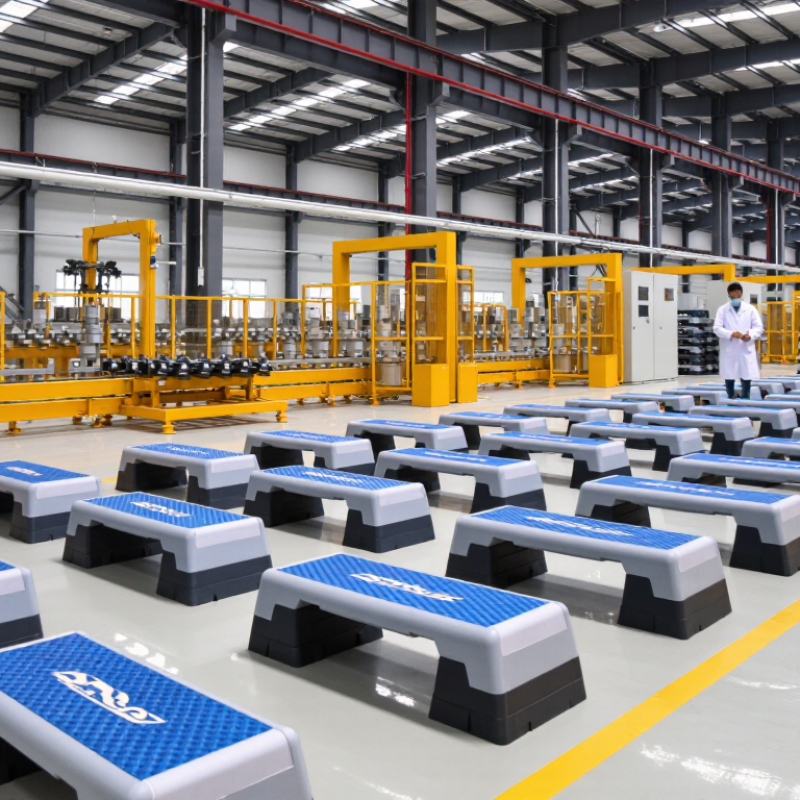
Supplier selection should begin with a physical factory audit, not a polished catalog. Check injection-molding areas, steel storage, foam density records, and final load testing. Ask for batch traceability from raw material to carton. ISO’s 2022 Survey reported over 1.2 million ISO 9001 certificates worldwide, but certification alone does not prove product quality. Verify the certificate scope and audit date. Paper is not proof.

For aerobic step platforms, request test records for static load, repeated stepping, surface grip, and height-adjustment durability. Compare results with applicable EN ISO 20957 requirements. A useful warranty should state coverage, claim evidence, response time, and replacement responsibilities. Twelve months may be acceptable for basic models; commercial buyers often need longer protection. Confirm who pays freight for defective units. Small wording matters.

Export history can reveal more than sales claims. Review 24 months of customs records, destination markets, shipment frequency, and product classification. UN Comtrade data can support cross-checking, although step platforms may appear under broad fitness-equipment codes. Do not rely on screenshots. Request redacted bills of lading or shipping summaries. I would also inspect one production batch before approval. That adds cost, yet it may expose unstable plastics or weak packaging. No audit predicts every failure. Keep a backup supplier and record every correction agreed in writing.