Ultimate Tips for Using a Home Aerobic Step to Maximize Your Workout Results
In recent years, the home fitness industry has seen a significant surge, with the demand for versatile workout equipment like the Home Aerobic Step skyrocketing. According to a study by the International Health, Racquet & Sportsclub Association (IHRSA), the at-home fitness market is expected to grow at a CAGR of 23% through 2025. The Home Aerobic Step, in particular, stands out as an effective tool for both cardiovascular conditioning and strength training. As fitness expert Dr. Linda Thornton remarks, "Incorporating a Home Aerobic Step into your routine not only boosts heart health but also enhances muscular endurance, making it a cornerstone for functional fitness."
Utilizing a Home Aerobic Step can transform an ordinary workout into a dynamic and engaging experience. Research from the American Council on Exercise (ACE) indicates that step aerobics can burn up to 600 calories per hour, providing a time-efficient way to achieve weight loss goals while improving overall fitness levels. With the growing interest in home workouts, understanding the best practices and techniques for using this equipment can maximize the benefits. Whether you are a beginner or a seasoned athlete, integrating the Home Aerobic Step can elevate your training regime and lead to substantial results. By following expert-backed tips, individuals can optimize their usage of this indispensable fitness tool and enjoy a revitalizing workout experience.
Benefits of Incorporating Aerobic Step into Your Fitness Routine
Incorporating an aerobic step into your fitness routine can significantly enhance your workout results by providing a versatile platform for various exercises. According to a study published in the Journal of Sports Science and Medicine, integrating step aerobics can increase the overall caloric burn by approximately 30% compared to traditional aerobic exercises. This increase is primarily due to the additional energy expended through vertical movements, making it an efficient tool for those aiming to lose weight or boost their cardiovascular health.
Furthermore, the use of an aerobic step improves balance, coordination, and muscular endurance. Research from the American College of Sports Medicine indicates that step training can lead to improved lower body strength, as it engages major muscle groups such as the quadriceps, hamstrings, and glutes. Participants in step aerobics classes often report higher rates of workout enjoyment and adherence, as diverse exercises can be performed, preventing workout monotony and enhancing motivation. Incorporating an aerobic step not only elevates the intensity of workouts but also maximizes the effectiveness of your fitness regime.
Benefits of Incorporating Aerobic Step into Your Fitness Routine
Choosing the Right Aerobic Step: Size, Height, and Material Considerations
When selecting the right aerobic step for your home workouts, several factors come into play, including size, height, and material. According to a report from the American Council on Exercise (ACE), the optimal height for aerobic steps typically ranges from 4 to 8 inches, depending on your fitness level and exercise intensity. Beginners may benefit from a lower step height to ensure safety and build confidence, while more advanced users can leverage higher steps for enhanced cardiovascular and muscle endurance training.
The size of the aerobic step is also crucial for accommodating a variety of exercises. A wider platform offers greater stability, which is vital for movements that require balance. Research published in the Journal of Sports Science & Medicine indicates that a step surface measuring around 24 inches by 12 inches allows enough space for various foot placements, facilitating more dynamic workouts. Material considerations should not be overlooked either; durable, non-slip materials are essential for preventing accidents during high-intensity routines. High-density polyethylene (HDPE) and rubber-coated options are often recommended for their durability and traction, aligning with safety standards set by fitness organizations. By thoughtfully considering these factors, you can enhance your workout experience and achieve better results.
Ultimate Tips for Using a Home Aerobic Step to Maximize Your Workout Results
| Dimension |
Description |
Considerations |
| Size |
Standard sizes range from 26" to 48" |
Choose based on your height and space available |
| Height |
Adjustable heights typically from 4" to 8" |
Higher steps increase workout intensity |
| Material |
Common materials include plastic, rubber, and foam |
Durability and grip are critical for safety |
| Weight Capacity |
Ranges from 200 lbs to over 400 lbs |
Ensure it suits your weight for safety |
| Slip Resistance |
Textured surface to prevent slipping |
Important for safe aerobic activities |
Effective Aerobic Step Workouts: Duration, Intensity, and Variability
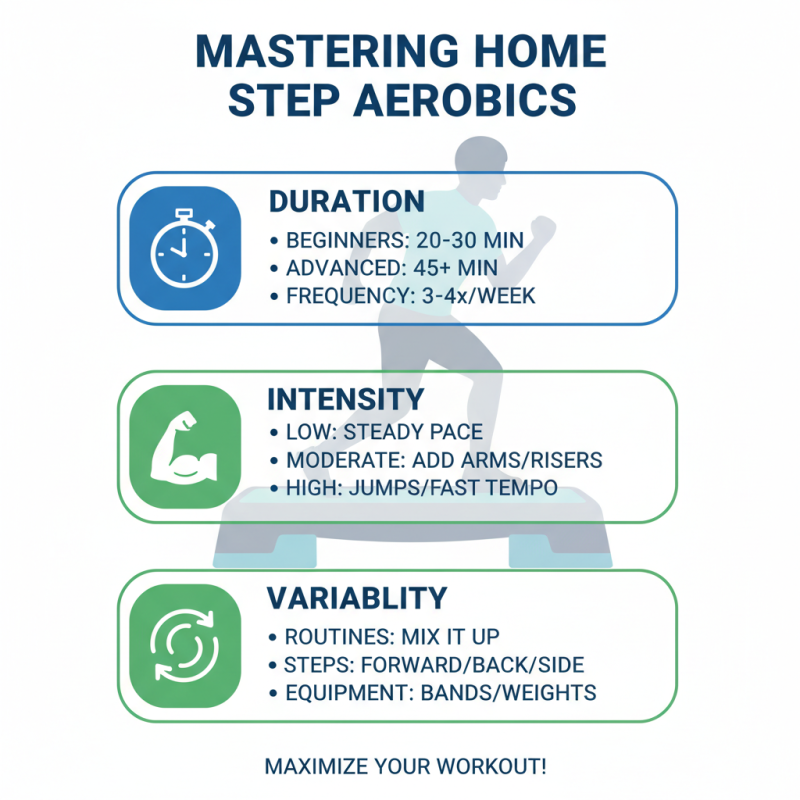
When using a home aerobic step, understanding the principles of duration, intensity, and variability is crucial for maximizing workout results. The duration of your aerobic step workouts should be tailored to your fitness level and goals. For beginners, starting with 20-30 minutes can be effective, gradually increasing to 45 minutes or more for more advanced users. Consistent sessions of at least three to four times a week will help build endurance and strength.
Intensity plays a significant role in the effectiveness of your aerobic step workouts. A good rule of thumb is to maintain a moderate to high intensity where you can still talk but are slightly out of breath. Incorporating intervals—alternating periods of higher intensity with lower intensity recovery—can enhance calorie burn and improve cardiovascular fitness. Additionally, introducing variability, such as changing the height of the step, the types of movements (like lunges or side steps), and even music tempo, keeps your workouts fresh and engaging, ultimately promoting better adherence and progress.
Common Mistakes to Avoid When Using an Aerobic Step for Workouts
When using an aerobic step for workouts, avoiding common mistakes is crucial for maximizing effectiveness and preventing injury. One frequent error is setting the step height too high. Beginners often underestimate their fitness level, leading to strained muscles and unnecessary fatigue. It’s essential to start at a lower height and gradually increase it as confidence and strength improve. This practice not only enhances safety but also fosters better form during exercises.
Another mistake is neglecting proper footwear. Wearing the wrong type of shoes can compromise stability and support, increasing the risk of slips and falls. It's important to choose cross-training shoes or those specifically designed for aerobic workouts, as they provide the requisite grip and cushioning. Additionally, many individuals focus solely on speed rather than controlled movements. Rushing through exercises can lead to poor technique, diminishing the workout's effectiveness. Instead, concentrate on performing each movement with precision, which will yield better results and a more enjoyable experience.
Tracking Your Progress: Measuring the Impact of Aerobic Step Workouts
Tracking your progress is essential when it comes to maximizing the benefits of your aerobic step workouts. One effective way to measure the impact of these sessions is by keeping a detailed workout journal. In this journal, you can record the duration of your workouts, the intensity levels, and the number of repetitions or sets completed. Tracking such metrics not only helps you identify patterns in your performance but also encourages you to push your limits as you see your progress unfold.
Additionally, using fitness apps or wearable devices can provide insightful data on your heart rate, calorie burn, and overall workout intensity during your aerobic step sessions. These technological tools offer a convenient way to monitor changes over time, allowing for a more personalized approach to your fitness journey. By comparing data from different workouts, you can assess how your body adapts, ensuring your routines remain challenging and effective. Emphasizing progress tracking will help keep you motivated and on track to achieve your fitness goals.